
Content planning can feel overwhelming. Coming up with creative ideas that align with your marketing goals, connect with your audience, and fit different social media platforms is not always easy.
Without a clear plan, posting often becomes inconsistent and reactive. However, with a simple structure, content planning becomes much more manageable and strategic.
In this guide, we will walk through the essential elements of content planning using a practical example: a café creating a post about “The Benefits of Matcha.” You can also use our free template to follow along and organize your own content effectively.
Accessing the Free Content Planning Template
To get your editable template:
- Click on the Google Sheets link provided: Social Media Content Planning
- In the top left corner, click File
- Select Make a copy
- Save it to your Google Drive
This will allow you to edit and use the template for your own content planning.
As we go through each section, you can follow along and fill in your template step by step.
Why Content Planning Matters
Content planning ensures that every post serves a purpose rather than being created randomly.
For example, instead of posting a random photo of a matcha drink without context, a café can plan a post that educates customers about matcha’s benefits while also promoting their menu.
This approach helps the café:
- Educate customers
- Build trust
- Increase interest in their matcha products
- Maintain consistent posting
Over time, this structured approach leads to stronger brand recognition and better marketing results.
Key Elements of an Effective Content Plan (Using the Matcha Café Example)
1. Content Idea
The first step is to clearly define your content idea. In the template, write down your idea in the Content column.
Example:
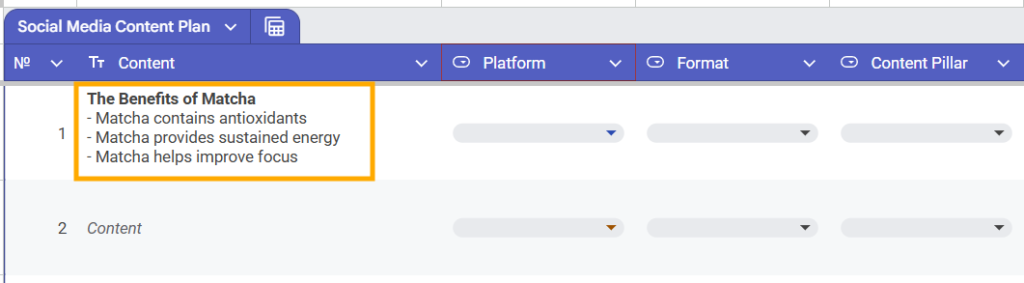
This type of content is educational, which helps build trust and positions the café as knowledgeable and professional. Instead of simply selling, the café is providing value first. This increases the likelihood that customers will choose their café when they want matcha.
2. Platform Selection
Next, decide where you will post this content.
Example:
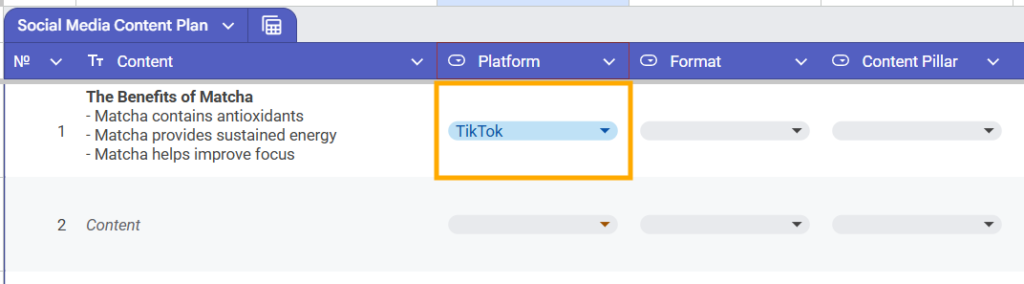
This decision may be based on how each platform is used: TikTok is ideal for short videos showing matcha preparation and explaining its benefits
Choosing the right platform ensures the content reaches the intended audience effectively.
3. Content Format
Now decide what format the content will take.
Example:
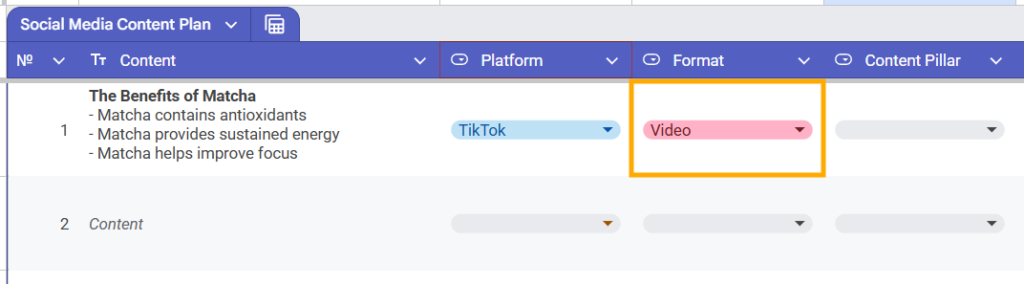
In this video, the café may show:
- The matcha powder being prepared
- The matcha being poured into the cup
- Text on screen explaining benefits such as
“Rich in antioxidants”
“Provides calm and focused energy”
Defining the format helps the team understand exactly what needs to be created. It also ensures a balanced mix of content types over time.
4. Content Pillar
Next, identify the content pillar. Content pillars are the main categories your content falls into. They ensure your content stays aligned with your brand strategy and maintains variety.
Common content pillars include:
- Social proof
- Events and promotions
- Educational
- Product demos
- Trends
- Entertainment
Example:
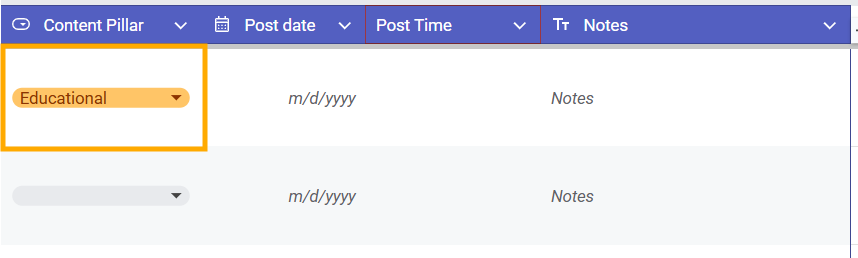
In this case, “The Benefits of Matcha” is educational content because it teaches the audience something valuable. This builds trust and positions the café as knowledgeable, rather than only selling products.
For comparison, the same café could create different matcha content under different pillars:
- Social proof: Customer testimonial saying “This matcha helped me stay focused while studying.”
- Events and promotions: “Matcha Monday – 20% off all matcha drinks today.”
- Product demo: Barista showing how their signature matcha latte is made.
- Trends: Participating in a trending TikTok sound while preparing matcha.
- Entertainment: Fun video comparing customer reactions before and after drinking matcha.
Using content pillars ensures your content strategy stays balanced and avoids being overly promotional.
5. Post Date and Time
Next, decide when the content will be published.
Example:
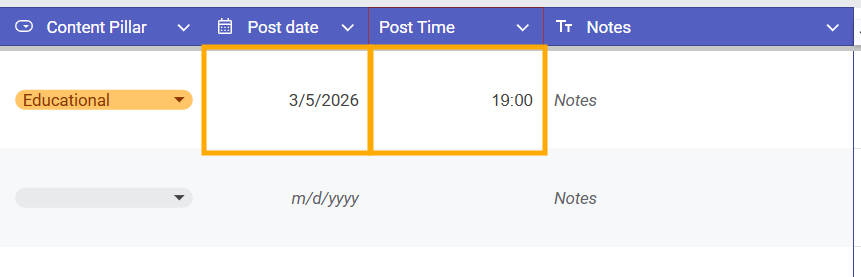
Setting a specific date ensures that the content is prepared in advance. Without a planned date, content is more likely to be delayed or forgotten. Planning also allows the café to coordinate content with promotions, campaigns, or seasonal trends.
Specific post time may be chosen because the café’s audience is most active on social media in the evening.
Posting at the right time increases the likelihood of:
- More views
- More engagement
- Better performance overall
Over time, performance data can help refine these posting times.
6. Notes Section
The Notes section provides additional instructions or reminders.
Example:
Notes:
- Use natural lighting when filming
- Show close-up shots of the matcha preparation
- Emphasize the vibrant green color
- Use calming background music
- Include text overlay explaining the benefits
These notes ensure clarity during content creation. If multiple team members are involved, everyone understands the content direction.
How This Looks in Your Template
Your template row may look like this:
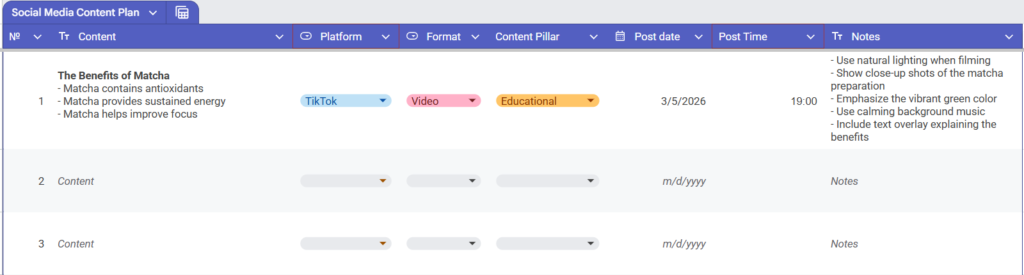
This simple structure transforms an abstract idea into a clear, actionable plan.
How This Improves Your Marketing
Instead of randomly posting photos and videos, your business now:
- Set a clear content objective
- Defined your content platform
- Planned the content format
- Scheduled posting time
- Set clear production instructions
This improves efficiency, consistency, and overall marketing effectiveness. It also ensures that content contributes toward business goals rather than existing in isolation.
We hope you follow along using the template and begin planning your content with clarity and confidence. Congratulations on taking the first step toward creating a more organized and strategic content system.